Why Rebranding Fails When It Starts With the Logo

Most business owners I meet who want to rebrand start the conversation the same way. They say — 'We need a new logo. Something more modern. Maybe change the colours too.' They have already shortlisted two designers on Instagram. The brief is ready. What they do not realise is that they are about to spend money on decoration while the structural problem stays untouched.
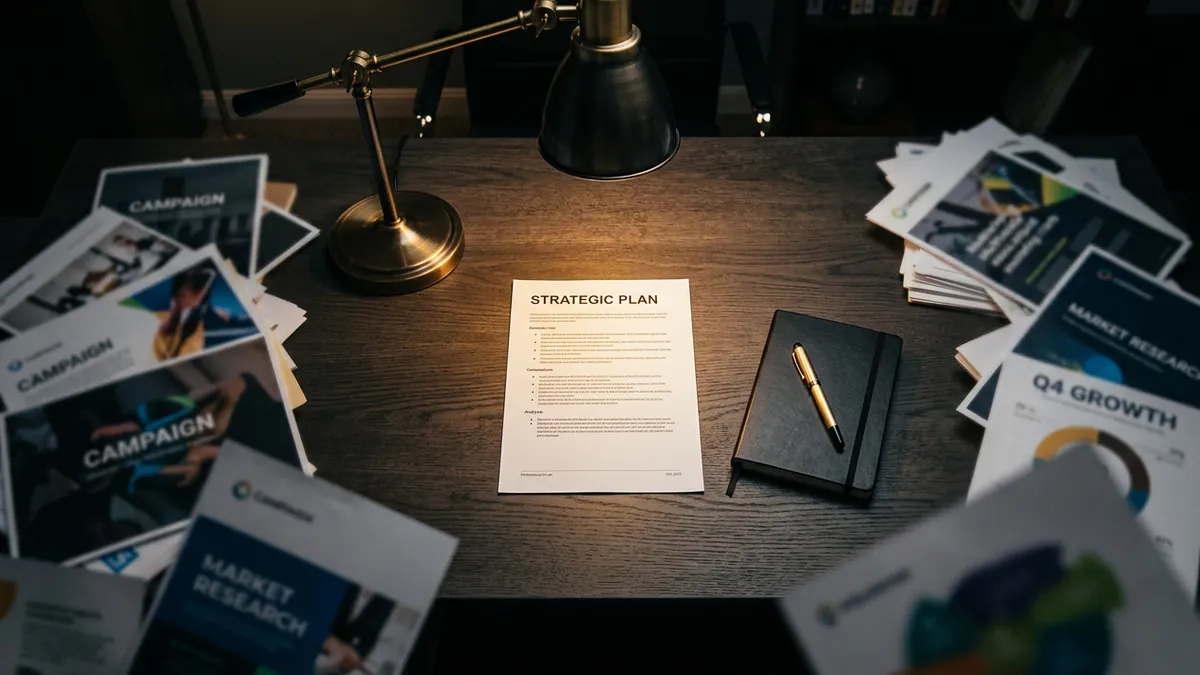
Rebranding is not a design project. It is a business clarity project that sometimes results in new design. The logo is the last thing you should change, not the first. I have seen manufacturers, service businesses and retail founders go through full rebrands — new logo, new website, new packaging — and come back eighteen months later saying nothing really changed. Enquiries still feel random. Pricing conversations are still difficult. The right kind of buyers still are not coming. That is because the visual layer was refreshed but the strategic layer was never touched.
So what is the strategic layer? It is simple but most founders have never written it down clearly. What does your business actually do, for exactly whom, better than who, and why should someone trust you over anyone else. That is it. Four questions. But when I sit with a founder in a one-to-one consultation and ask these four questions, most cannot answer them precisely without pausing, backtracking or giving three different answers. That vagueness is the real problem. A new logo cannot fix that.
Here is what typically triggers a rebrand. Business has been running for five to eight years. Revenue is stuck in a band. You keep attracting the wrong type of clients — either budget buyers or those who negotiate heavily. You feel embarrassed sharing your website link. You look at competitors and feel like they look more credible even though your work is better. These are valid signals. But they are signals of a positioning problem, not a design problem. The fix starts with getting clear on who you want to serve, what you want to be known for, and what your business should feel like to the right buyer.
One manufacturer I worked with made industrial safety equipment. Solid products, fifteen years in business, reasonable revenue. He wanted a rebrand because his website looked outdated. When we dug deeper, the real issue was that he was selling to procurement managers purely on price because no one understood why his products commanded a premium. His existing brand said nothing about precision, compliance or the cost of failure in his industry. That was the gap. We spent four weeks defining positioning, message hierarchy and proof points before a single design file was opened. The rebrand that came out of that work looked completely different from what he originally had in mind — and it worked.
Another common mistake is rebranding reactively. A competitor launches a flashy new identity. Your sales are dipping. You panic and decide the brand looks old. These are emotional triggers, not strategic ones. Rebranding takes at minimum three to six months to take hold in the market. It requires internal alignment — your team, your sales communication, your pricing, your proposals all need to reflect the new position. If you rebrand without that internal work, you end up with a new logo on old behaviour, which is confusing to buyers and embarrassing in sales conversations. I cover exactly this problem in my business growth workshops for founders who are at a genuine inflection point.
There are situations where rebranding genuinely makes sense. Your business has moved into a significantly different market segment. You are targeting a different buyer than when you started. You have expanded from local to national or into exports. Your current name or visual identity actively creates the wrong impression — too small, too regional, too generic. Or there was a reputational issue and you need a clean separation. These are real reasons. But even in these cases, the sequence matters. Strategy first. Messaging second. Visual identity third. Rollout plan fourth.
If you are considering a rebrand right now, here is what I suggest you do this month before spending anything. Write down in plain language what your business does, who your best three clients are and what they actually bought from you — not the product, the outcome. Then write down who you do not want as a client and why. Then look at your current brand — logo, website, proposals, social pages — and ask whether any of it communicates what you just wrote. In most cases, there is a significant gap. That gap is your real brief. Take that to a designer or a brand consultant, not a mood board of logos you like from Pinterest. If you want help thinking this through before you commit to a direction, feel free to contact me directly.
Rebranding done right is one of the highest-return investments a growing business can make. It changes who you attract, what you can charge and how seriously buyers take you from the first touchpoint. But rebranding done wrong — starting with aesthetics, skipping the strategy, rushing the rollout — is expensive noise. The founders who get the most out of it are the ones who treat it as a business decision first and a design decision last.
Want to understand where your business growth is stuck?
Book a Business Growth Diagnostic with Abhijit JK — an honest, focused 60-minute one-to-one session with Abhijit JK on your brand, website and growth.
Book a Business Growth Diagnostic