Why Customers Pay More to Your Competitor for the Same Thing
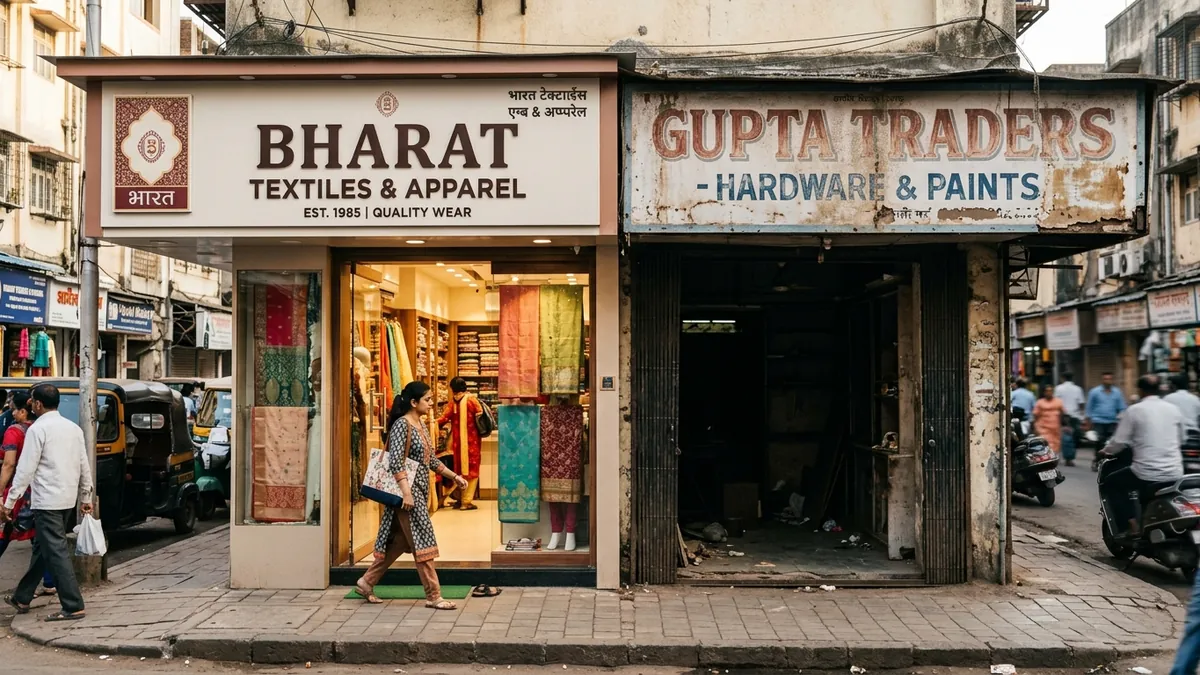
Most business owners I meet are convinced that price is the reason they lose deals. The competitor quoted lower, so the customer went there. That is the story they tell themselves. But when I sit with them for an hour and we trace actual lost deals together, a different picture comes out. Many of those customers paid the competitor more — not less. The business owner just never found out.
This happens more than people admit. A buyer shortlists two vendors. One has a cleaner website, a sharper proposal, a consistent way of communicating, maybe a few testimonials that sound credible. The other is just as capable, maybe even better at the actual work, but nothing they show the buyer makes that clear. The buyer goes with the first. Not because the price was lower. Because the perceived risk felt lower.
That gap between your actual quality and what a buyer perceives before they work with you — that is a brand problem. Not a product problem, not a pricing problem. Most Indian manufacturers and service businesses I have worked with are genuinely good at what they do. The problem is that nothing outside the work itself communicates that quality. The business looks generic. The messaging is vague. The visual presentation is inconsistent. So buyers fill in the blanks with doubt.
Premium brand perception is not about looking expensive or redesigning your logo. It is about removing uncertainty from the buyer's mind before they place the order. Think about why someone pays more for a CA they trust versus a cheaper one they found on a classifieds site. It is not the qualification that differs — both may have the same degree. It is that one has built visible credibility through how they present themselves, speak to clients, and document their process. The other has not. If you want to understand where your own brand stands on this spectrum, a one-to-one consultation is often the fastest way to get an honest read.
There are four things I consistently see missing in businesses that lose on perception. First, they have no clear positioning. They describe themselves in the same way as every competitor — 'quality products, best service, years of experience.' That language means nothing to a buyer. Second, their visual identity is inconsistent. The logo looks different on the banner versus the invoice versus the WhatsApp display picture. Third, they have no proof that travels without them. No case studies, no testimonials in a format that a buyer can actually read and trust, no process document that shows how they work. Fourth, the founder or sales team changes the pitch every time. So the brand story depends entirely on who the buyer talks to that day.
Fixing this does not require a large budget. It requires clarity and consistency applied over a few months. Start with how you describe what you do. Write one paragraph that explains who you serve, what specific problem you solve, and what makes your approach different. Not better in a generic sense — different in a specific, verifiable sense. Then make sure that paragraph shows up in the same form on your website, your proposal cover page, your email signature, and your LinkedIn profile. Most business owners skip this and jump to advertising. But advertising an unclear brand just spreads the confusion faster.
Next, collect proof. Call three customers who had a good experience and ask them for a written testimonial or a short video. Ask them to be specific — not 'great service' but 'they delivered two days before the deadline and flagged a defect we had not noticed.' Specific proof is believable. Generic praise is ignored. Put these testimonials somewhere visible. If you are not sure how to structure this, I cover the full process in detail at business growth workshops that are specifically designed for founders running lean teams.
The other thing that builds perception fast is your proposal or quote document. Most Indian businesses send a quote in a WhatsApp message or a plain Excel sheet. Your competitor who charges more probably sends a PDF with their logo, a short summary of the client's problem, their proposed solution, timeline, and terms — all formatted clearly. That document signals professionalism before a single rupee is exchanged. It tells the buyer: this company has done this before and they know what they are doing. You do not need a designer for this. A clean Word or Google Docs template works if the content is right.
The uncomfortable truth is that buyers do not always buy the best option. They buy the option that feels safest given the information they have. If your competitor has built a brand that reduces perceived risk — even slightly — they will win deals at a higher price. Your job is not to undercut them. Your job is to make your actual quality visible before the buyer has to take your word for it. That shift in thinking — from 'we need to compete on price' to 'we need to make our value clearer' — is what separates businesses that grow margins from those that stay stuck in a race to the bottom. If you want to start working on this for your business, you can reach out directly through the contact page and we can figure out where to begin.
Want to understand where your business growth is stuck?
Book a Business Growth Diagnostic with Abhijit JK — an honest, focused 60-minute one-to-one session with Abhijit JK on your brand, website and growth.
Book a Business Growth Diagnostic