Why Your Business Quote Never Gets a Reply
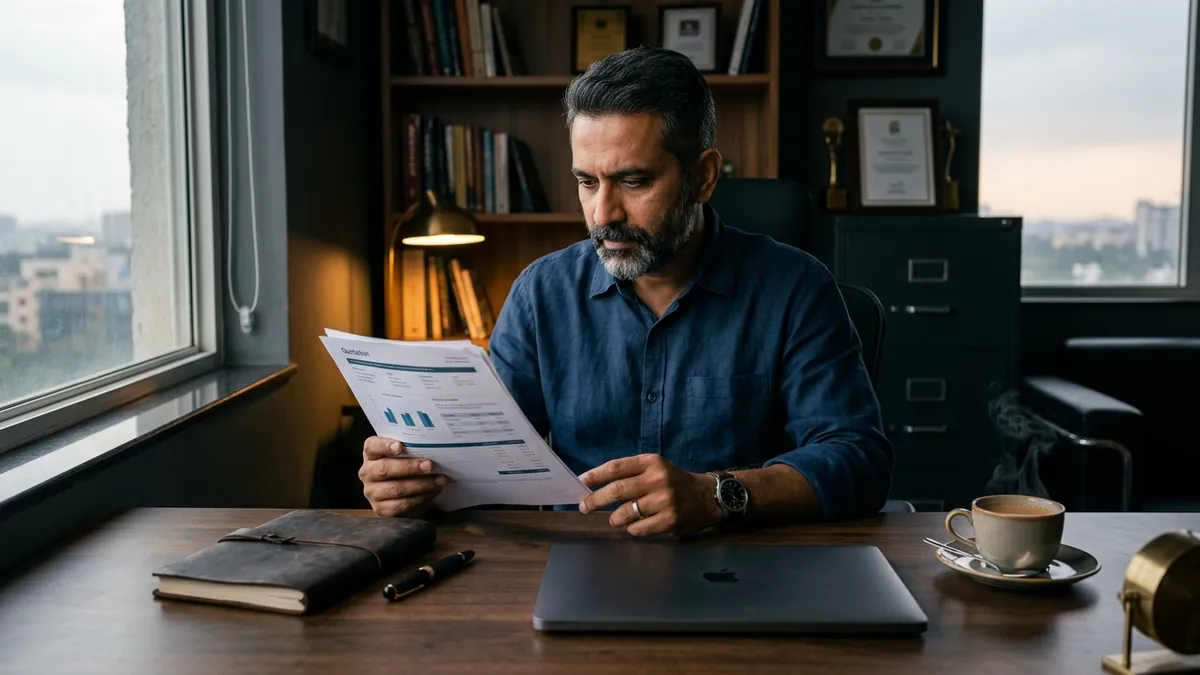
Most business owners I meet believe the hard part is getting the enquiry. Once someone asks for a quote, they think the deal is almost done. But that is exactly where most deals quietly die. The prospect ghosts. The follow-up call goes unanswered. The WhatsApp message gets two grey ticks. And the owner is left wondering what went wrong.
The problem is almost never the price. I have seen this with manufacturers in Pune, service businesses in Bengaluru, clinics in smaller towns — they all assume the buyer went with someone cheaper. Sometimes that is true. But more often, the quotation itself failed. Not because the numbers were wrong. Because the document gave the buyer no reason to trust you, no reason to choose you, and no clear next step to take.
Here is what a typical Indian MSME quotation looks like. A table with item names and rates. A subtotal. GST added at the bottom. Your bank details if you are feeling optimistic. Maybe your logo somewhere at the top. That is it. No context. No explanation. No story. The buyer receives this and has zero understanding of what they are actually getting, why your price is what it is, or what happens after they say yes. So they do what any uncertain buyer does — they wait, shop around, or forget about it entirely.
A quotation is not just a price document. It is a sales document. It is often the last thing a buyer reads before making a decision. Think about that. After your meeting, after all your conversations, the quote is what they sit with alone. It should be doing selling work on your behalf. It should remind them of the problem they came to you with. It should briefly restate what you are solving. It should show them what is included, what is not, and why the price reflects real value. One page done well beats three pages of fine print done lazily.
There are three specific mistakes I see constantly. First, the quotation arrives too late. A buyer asks on a Monday. You send it on Thursday. By Thursday they have already spoken to two competitors. Speed signals how seriously you take the enquiry. Same day or next morning is the standard you should hold yourself to. Second, there is no expiry or urgency. An open-ended quote with no validity date sits in someone's inbox indefinitely. Put a 7-day or 10-day validity on it. Not as a pressure tactic, but because your costs can change and it also prompts a conversation. Third, there is no human follow-up built in. Sending the quote is not the end of the process. Your follow-up call the next day, your short WhatsApp message two days later — these need to be planned before you even hit send.
Format matters more than most founders realise. If your quote arrives as a messy Excel sheet or a WhatsApp forward with numbers in plain text, it communicates something about your business before the buyer reads a single rupee figure. It says: we are casual about this. A clean PDF on your letterhead, with your brand colours, your contact details, and a short covering note addressed to the buyer by name — this alone separates you from seventy percent of your competition. If you want to understand why brand presentation affects buying decisions well before price is even discussed, the about Abhijit page gives you a sense of how I approach this with clients.
The covering note is underused and underestimated. Before the quote table, write three to five lines. Recap what the buyer told you. Confirm what you are quoting for. Mention one specific thing you are including because of their situation. Then invite them to call you with questions. This takes five minutes to write and it makes the buyer feel heard. That feeling — of being understood — is what most vendors never create. It is also what makes a buyer choose you even when your price is not the lowest. If you are working through your entire sales process and want sharper thinking applied to your specific business, a one-to-one consultation is where we go deep on exactly this.
A few things you can fix this month without any budget. One: create a quotation template in Canva or Word that looks clean and carries your brand. Two: add a short covering paragraph before every quote you send. Three: set a follow-up reminder for 24 hours after every quotation goes out — call them, do not just WhatsApp. Four: add a validity date to every quote. Five: after a deal you lost, call the buyer and simply ask why. Not to argue. Just to learn. Most will tell you honestly, and that feedback is worth more than any consultant's advice.
Winning more deals from the enquiries you already have is the fastest way to grow without spending more on marketing. Your pipeline is probably healthier than your conversion rate. Fix the quotation, fix the follow-up, and you will start closing business you were already losing on paper. If you want to work through your sales process, your positioning and your conversion gaps together, look at the business growth workshops I run for MSME owners and founders across India.
Want to understand where your business growth is stuck?
Book a Business Growth Diagnostic with Abhijit JK — an honest, focused 60-minute one-to-one session with Abhijit JK on your brand, website and growth.
Book a Business Growth Diagnostic