Why Your Premium Product Still Sells at MSME Prices
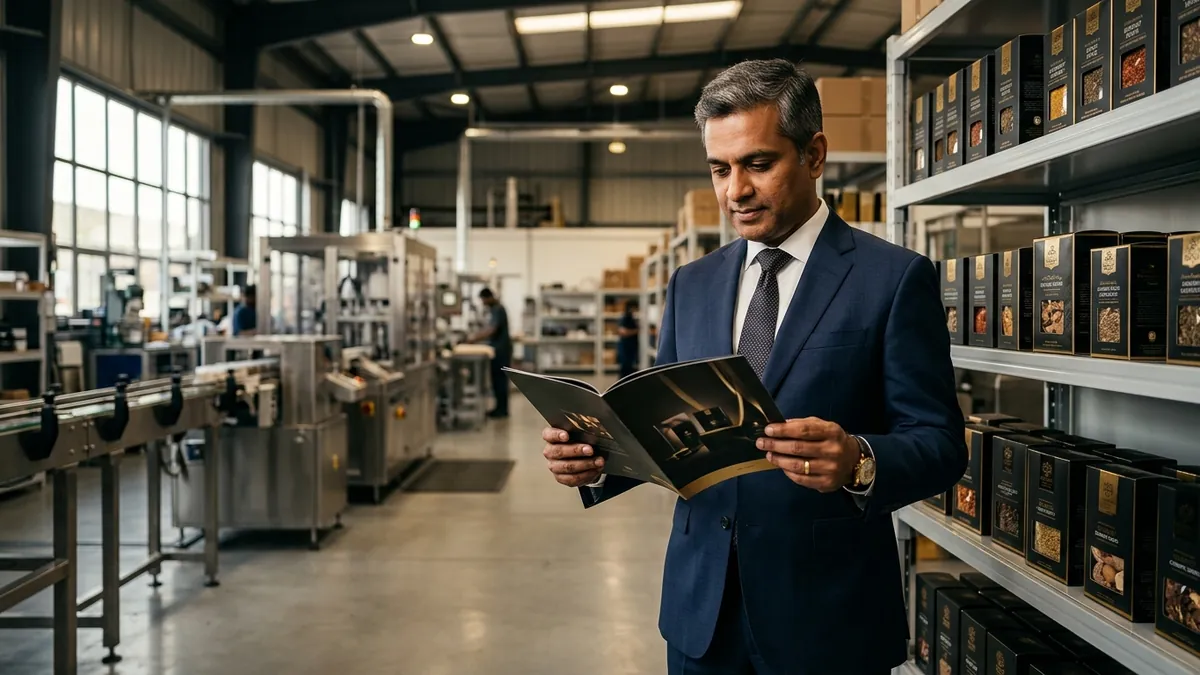
You spent more on raw material. You hired better people. Your quality control is tighter than most competitors. And yet when a buyer calls, the first thing they ask is — 'What is your best price?' You end up giving a discount you never planned to give, just to close the deal. This is not a pricing problem. This is a brand perception problem.
Most business owners I meet have genuinely better products than what they charge for. A garment manufacturer in Tirupur. A spice exporter in Cochin. A packaging solutions company in Pune. All of them doing serious quality work. But from the outside — from the buyer's point of view — they look exactly like everyone else. Same kind of website. Same category of brochure. Same way of speaking about the business. When you look the same, you get treated the same.
Premium perception is not built by saying 'we are premium.' That is the most common mistake I see. Business owners add the word 'premium' or 'quality assured' to their tagline, print it on the brochure, and expect the market to believe it. The market does not read your tagline. It reads every signal your brand sends — your packaging, your email signature, the background in your product photos, the language you use in your proposal, even how your team picks up the phone. Every single touchpoint either adds to or subtracts from what buyers believe about your price point.
Here is a practical test. Go to your own website and WhatsApp catalogue right now. Look at it as a buyer seeing you for the first time. Does it feel like a company that charges 20% more than the market? Or does it feel like another vendor trying to compete on price? Most founders are genuinely surprised when they do this honestly. The website that was built five years ago for half the budget still sits there, silently convincing buyers that you are cheap. If you want to understand how this kind of brand clarity gap plays out across a business, one-to-one consultation is where I usually start working through these specific signals with founders.
Another thing I have noticed with manufacturers and product businesses — they describe themselves the way they think, not the way buyers think. A pharma packaging company will say 'we manufacture blister packs and strip packs with GMP compliance.' A buyer thinking about this does not process GMP compliance emotionally. They process risk. What they want to hear is that using your packaging will protect their product, pass regulatory checks, and not embarrass them with end customers. Translating your capability into the buyer's emotional language — that is brand positioning. That is what makes them feel like they are dealing with a serious, reliable supplier worth paying more for.
There are three areas where premium perception usually breaks down fastest. First is visual consistency — when your visiting card, your proposal PDF, your Instagram page and your factory signage all look like they came from four different businesses. Second is how you talk about your own business — if you cannot say in two clear sentences what makes you different without using the word 'quality' or 'trusted,' buyers fill that gap with their own assumption, usually that you are interchangeable. Third is the kind of clients you already show — if every reference customer on your website or brochure is a small buyer, big buyers assume you cannot handle them. I covered related gaps in depth at a business growth workshops session last year where manufacturers were genuinely shocked at how many signals they were sending in the wrong direction.
The fix is not a full rebrand. It does not have to be expensive. What it does require is being deliberate. Start with one thing this month — your proposal or quotation document. Most Indian MSME proposals look like an Excel sheet with a letterhead slapped on top. That document is often the last thing a buyer sees before they decide. If it looks like you do not take your own business seriously, they will not take your price seriously. Redesign it with proper margins, clear structure, a short statement of what makes you different, and professional typography. That single change shifts the perception of the person reading it.
After the proposal, look at your about section — wherever it lives, your website, your brochure, your LinkedIn. Does it talk about your journey and your values in a way that a buyer finds relevant? Or is it a list of years in business and number of employees? Buyers at a higher price point want to know they are dealing with someone who has thought about their craft. Show your point of view. Show what you refuse to compromise on. Show the kind of clients you do your best work with. That specificity signals seriousness and seriousness commands a better price. If you want to read more about how I approach brand building for businesses like yours, the about Abhijit page gives a proper picture of the work and the philosophy behind it.
Premium brand perception is not about looking expensive for the sake of it. It is about making sure the genuine quality you have put into your product or service is actually visible to the people who are about to pay for it. Right now, for most Indian MSME founders, there is a gap between what they have built and what the market believes they have built. Closing that gap — methodically, practically, without spending a fortune — is exactly what brand strategy is for.
Want to understand where your business growth is stuck?
Book a Business Growth Diagnostic with Abhijit JK — an honest, focused 60-minute one-to-one session with Abhijit JK on your brand, website and growth.
Book a Business Growth Diagnostic

