Why Customers Trust Your Competitor More Than You
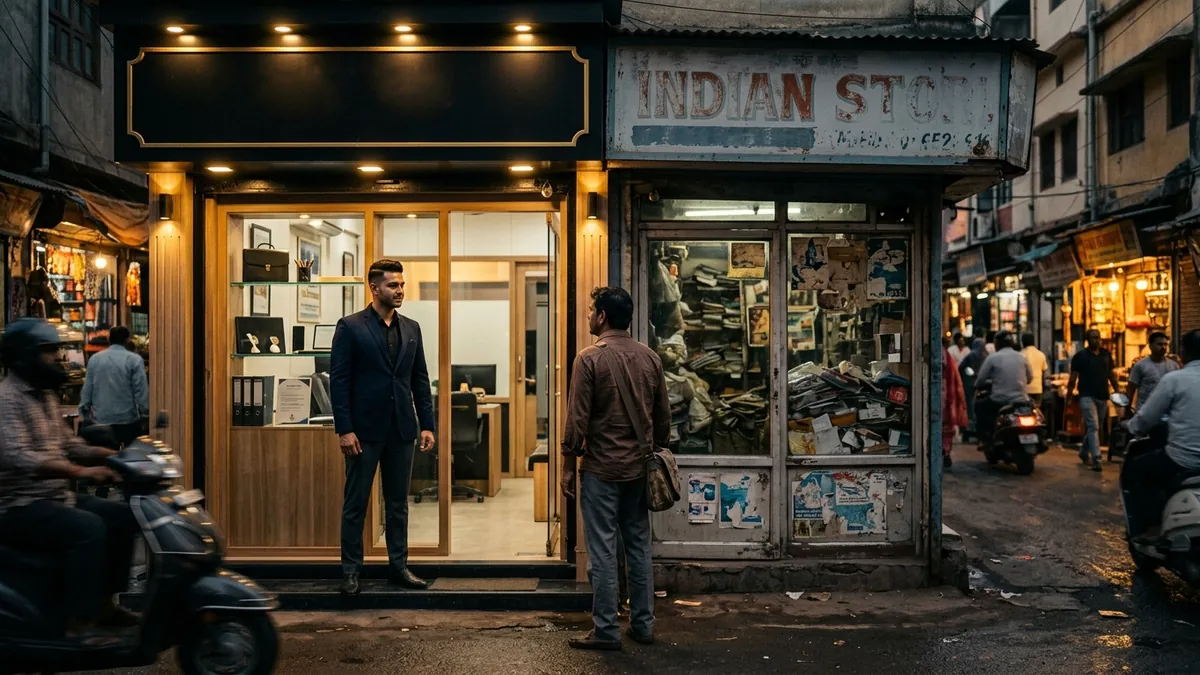
Most business owners I meet are genuinely good at what they do. Their product quality is solid. Their service is honest. Their pricing is fair. And yet, when a buyer needs to choose between them and a competitor, the competitor wins. Not because the competitor is better. But because the competitor feels safer to the buyer. That feeling is brand trust — and most Indian MSMEs have never deliberately built it.
Here is how this usually plays out. A prospect finds both of you — maybe through a Google search, a referral or a trade fair. They look at your website, your social presence, your proposal. Then they look at your competitor's. Somewhere in that comparison, they quietly decide one brand seems more established, more credible, more worth paying for. That decision happens in minutes. And it rarely has anything to do with your actual quality of work.
The problem is not that you lack experience. It is that your experience is invisible. I have worked with manufacturers in Pune and Coimbatore who had fifteen years in the business but nothing on their website, profile or materials that communicated that depth. Their competitor, who had been around for half as long, had cleaner branding, a few case studies, and a clear statement of who they served. Buyers chose them every single time. Not because of capability — because of clarity and visible proof.
Brand trust is built from signals, not statements. Saying 'we are reliable' on your website does nothing. What builds trust is when a buyer can see consistent visuals across your website, brochure and packaging. When they find your Google Business profile with real reviews. When your proposal looks like it came from a serious business. When your LinkedIn shows you actively engaging in your industry. Every one of these is a signal that you are legitimate, stable and worth trusting. Most small businesses are missing three or four of these signals entirely.
One of the fastest ways to lose trust before a conversation even begins is inconsistency. If your Instagram has a different logo than your visiting card, if your email signature looks like it was made in 2009, if your WhatsApp catalogue has blurry product photos — the buyer picks this up, even if they cannot name it. It just feels off. And when something feels off, the buyer protects themselves by going elsewhere. I cover how visual consistency is connected to brand trust in several of my business growth workshops because this is where most founders underestimate the damage being done.
Another trust gap I see constantly is the absence of a named human being behind the brand. Faceless businesses feel risky in India, especially for mid-sized transactions. Who is answering for this? Who do I call if something goes wrong? A founder who shows up — on the website, on LinkedIn, even in a short intro video — immediately makes the brand feel accountable. Your competitor who does this is not more credible because of their product. They are more credible because a real person is visible and reachable. If you want to think through how to position yourself as the trusted face of your brand, a one-to-one consultation can help you figure out where to start without turning it into a personal branding circus.
Third-party proof closes the trust gap faster than anything you can say about yourself. Client testimonials, case studies, before-and-after results, media mentions, certifications — these are trust shortcuts. A buyer does not know you yet. They need someone or something outside of you to vouch for you. Most Indian MSMEs collect this proof in their heads and in WhatsApp chats but never put it anywhere a new buyer can find it. Your competitor who has three testimonials on their website homepage is not better than you. They are just smarter about visibility.
The fix is not expensive or complicated. Audit what a new buyer actually sees when they search for you or land on your materials. Website, social profiles, proposal format, email communication, physical materials — go through each one and ask honestly: does this look like a business I would trust with my money? Where the answer is no, that is your trust gap. Fix those first. Then build in proof — reviews, case studies, client logos with permission. Then make sure a human being is visible and reachable. These are not branding luxuries. They are the baseline that your competitor has already cleared.
Trust is not built overnight. But it starts with a decision to treat your brand seriously — not just your product. The businesses I have seen grow steadily are not always the most talented in their category. They are the ones whose buyers felt safe choosing them. That safety is designed, not accidental. Start designing it this month, even in small steps, and the gap between you and your competitor begins to close.
Want to understand where your business growth is stuck?
Book a Business Growth Diagnostic with Abhijit JK — an honest, focused 60-minute one-to-one session with Abhijit JK on your brand, website and growth.
Book a Business Growth Diagnostic