Why Your Business Loses Revenue Between Enquiry and Invoice
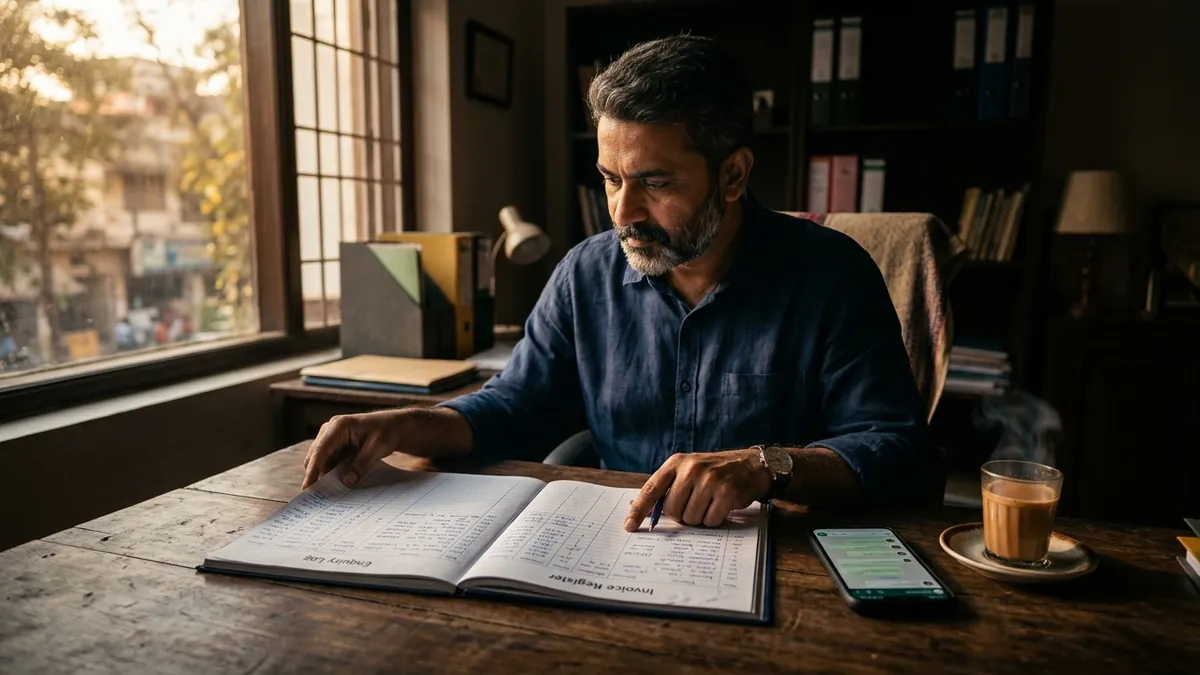
Most business owners I meet are not struggling to get enquiries. They are struggling to convert them. A potential buyer calls, sends a WhatsApp, fills a form, or walks in. Then somewhere between that first contact and a confirmed order, the deal dies quietly. No drama. No clear reason. The buyer just stops responding and the owner moves on. This happens every week in thousands of Indian businesses and the revenue loss from it is enormous — yet almost nobody is tracking it.
Here is the honest truth. The gap between enquiry and invoice is not a sales problem in most cases. It is a process problem. When I work with manufacturers, service businesses and retail brands, I find the same pattern repeatedly. The enquiry comes in, it gets a response of some kind, and then follow-up becomes completely dependent on how one person is feeling that day. There is no defined next step. No system. No accountability. The buyer drifts and the business blames the buyer for being 'not serious'.
Think about what happens at your end when a new enquiry arrives right now. Who picks it up? In how many hours? What do they say? Is there a standard way you introduce your offering, your price range, your process? Or does each team member handle it differently? In most small businesses, it is the latter. One person quotes a price immediately. Another says 'let me check and get back to you' and forgets. A third gives too much information too fast and overwhelms the buyer. None of this is intentional — it is just the absence of a clear customer journey from first contact to confirmed order.
There are usually three or four specific points where revenue leaks in this gap. The first is slow response time. A buyer who enquires and gets a response within ten minutes is far more likely to convert than one who gets a reply six hours later. They have already moved on mentally. The second is unclear communication. When your reply does not answer the buyer's actual question — which is almost always 'can this person solve my problem and can I trust them' — they go cold. The third is no defined follow-up rhythm. One follow-up message is not a follow-up system. Most businesses send one message, get no reply, and give up. The fourth, and most damaging, is inconsistency in how the offering is presented. If two different people from your team describe your product or service differently, the buyer feels unsure about doing business with you at all.
I have seen this with food manufacturers who get retailer enquiries from B2B portals and lose sixty percent of them simply because nobody followed up after the first email. I have seen it with interior designers in Bengaluru who get client calls, quote verbally on the phone, and never send a written summary — so the buyer has nothing to refer back to when they discuss it with their spouse that evening. I have seen it with coaching businesses where the founder personally handles enquiries and converts brilliantly, but the moment an assistant takes over, conversion drops by half. These are not sales skill problems. These are system and clarity problems.
The fix is not complicated. Start by mapping what actually happens today, step by step, from the moment an enquiry arrives to the moment an invoice is raised or the lead is lost. Write it down honestly. Most founders are surprised by how patchy this map looks. Once you can see the gaps, you can start filling them — a response template that sounds human and not robotic, a simple follow-up schedule of three to five touchpoints over ten to fifteen days, a one-page document that explains your offering consistently, and a habit of ending every conversation with a clear next step. If you want help thinking through this for your specific business, a one-to-one consultation is often the fastest way to identify where your revenue is leaking and what to fix first.
One thing that helps enormously is revenue clarity — knowing exactly which enquiry source converts best, which product or service has the highest close rate, and what the average time is from first contact to payment. Most MSME owners are running on gut feel here. They think they know which leads convert, but they have never actually tracked it. When you start tracking, even in a basic spreadsheet, patterns become obvious very quickly. You stop spending energy on channels that generate noise and focus on what actually brings paying customers. This is one of the core things I cover in business growth workshops designed specifically for founders who want to grow without adding chaos.
None of this requires expensive software or a large team. It requires a decision to treat the space between enquiry and invoice as seriously as you treat the product or service itself. The buyer's experience of dealing with you starts the moment they reach out — not when the work begins. If that experience feels slow, vague, inconsistent or unprofessional, the best product in the world will not save the deal. Businesses that grow steadily in India are not always the ones with the best product. They are almost always the ones with the clearest, most reliable process for turning interest into income.
Start this week with one simple action. Count how many enquiries came in last month. Then count how many converted. If you do not know the second number off the top of your head, that is your biggest growth blocker right now — not marketing, not pricing, not competition. Fix the gap first. Everything else becomes easier once you do.
Want to understand where your business growth is stuck?
Book a Business Growth Diagnostic with Abhijit JK — an honest, focused 60-minute one-to-one session with Abhijit JK on your brand, website and growth.
Book a Business Growth Diagnostic

