Why Your Business Loses Customers Between Enquiry and Invoice
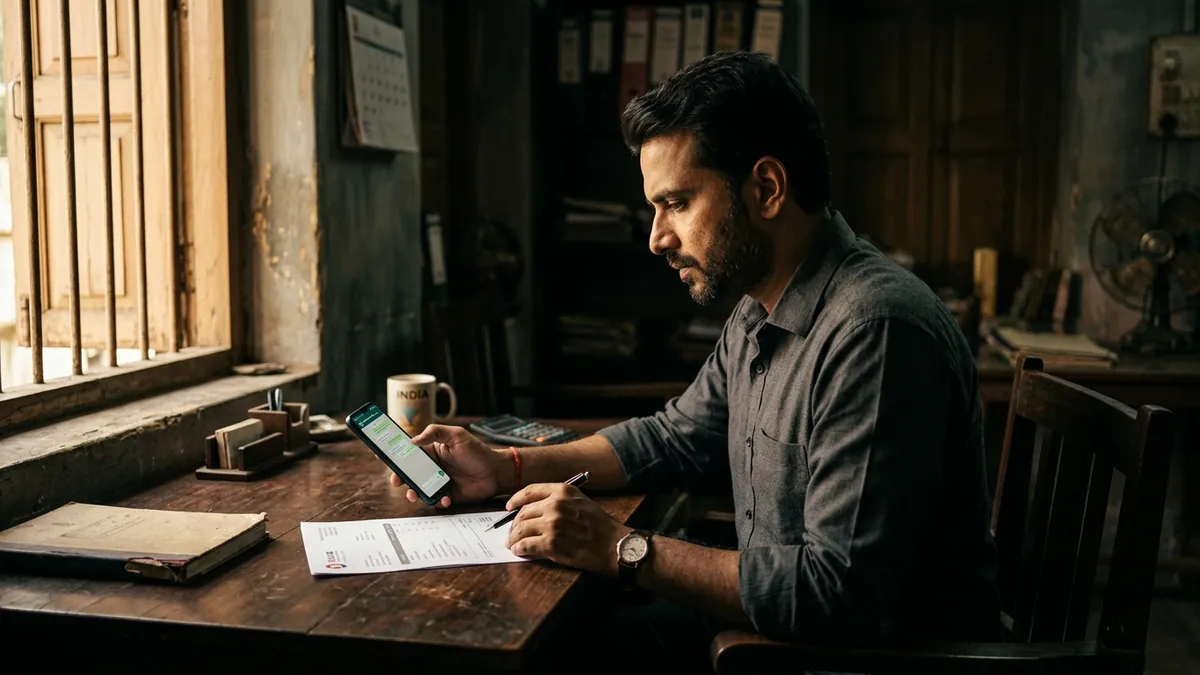
Most business owners I meet believe their biggest problem is getting more enquiries. They spend money on ads, post regularly on Instagram, ask for referrals. The enquiries come in. And then nothing happens. The deal does not close. The customer goes quiet. Another one lost. The real problem is not the top of the funnel — it is everything that happens between the enquiry and the invoice.
I have seen this pattern hundreds of times with manufacturers, service businesses, consultants and retailers across India. A potential buyer reaches out. The business owner responds, sometimes immediately, sometimes a day later. A quote goes out on WhatsApp as a screenshot or a rough number typed in chat. The buyer says 'let me think about it.' The owner waits. The buyer never comes back. The owner moves on, assumes the buyer was not serious, and keeps spending on getting more enquiries. The actual gap — the messy middle between interest and purchase — never gets looked at.
Here is what that gap usually looks like. There is no clear next step communicated to the buyer after the first reply. There is no document or message that builds confidence in your business — only a price number. There is no follow-up system, just hope. And there is no way for the buyer to quickly understand why your business is worth choosing over the three other quotes they have received. Every one of these is fixable. None of them require a big budget.
The first thing to fix is your response itself. When someone enquires, your first reply is your first impression. Most businesses send either too little — just a price — or too much — a long voice note explaining everything. What actually works is a short, structured reply that acknowledges the enquiry, tells the buyer what happens next, and gives them one clear reason to continue the conversation. Something as simple as 'Thanks for reaching out. I will send you a detailed note by this evening. Can I ask — are you looking for delivery by a specific date?' keeps the conversation alive and shows you are professional.
The second gap is the proposal or quote itself. I have worked with businesses whose quotes are typed in a WhatsApp message, whose PDF quotes have no business name on them, and whose proposals list only the price with no context around it. A buyer who is comparing options will not do your job for you. They will not call and ask for more information. They will simply choose someone who made them feel more confident. A clean, one-page proposal — even a simple PDF — with your business name, what is included, a brief line on why you are the right choice, and a clear next step will convert significantly better than a price in a chat message. If you want help structuring this kind of material, a one-to-one consultation is often where founders start.
The third gap is follow-up — or the complete absence of it. Most business owners follow up once, get no response, and stop. The buyer has not said no. They are busy. They may have shown the quote to their partner. They may be waiting for budget approval. A simple follow-up sequence — a WhatsApp message on day two, a short call on day four, a final message on day seven — can recover a significant portion of deals that would otherwise go cold. The message does not need to be pushy. 'Just checking in — did you get a chance to look at the proposal? Happy to clarify anything' is enough. Most businesses never send this message.
There is a deeper issue behind all of this, and I have seen it come up in almost every business growth workshop I have run. Founders do not have a documented customer journey. They rely entirely on instinct and individual conversations. When enquiries are low, they have no way of knowing whether the problem is reach, response quality, proposal clarity, or follow-up. Everything looks like a lead generation problem because that is the only number they track. Start tracking where enquiries actually drop off — after first reply, after the quote, after the follow-up. That number will tell you more than any ad metric.
One more thing that kills conversions silently — trust signals are missing at the moment of decision. When a buyer receives your quote, they will often do a quick search for your business. They will check your Google Business Profile, glance at your website, look at your Instagram. If what they find looks inconsistent, inactive or unclear, the doubt quietly grows. You do not need to be everywhere. You need the places you exist online to say the same clear thing about who you are and what you do. This is not a branding lecture — it is a direct conversion issue. Buyers who feel uncertain choose the safer-looking option.
If your business is getting enquiries but your revenue is not growing, the answer is almost never more marketing. It is fixing the journey a buyer takes after they first reach out. Start with your reply quality. Fix your proposal. Build a simple three-step follow-up habit. Make sure your online presence gives buyers confidence. These are not complex projects — they are one-month fixes that most founders keep putting off. Start with one. The difference in conversion rate, and in revenue, will be visible within weeks. If you are not sure where the gap is in your specific business, you can always reach out and we can look at it together.
Want to understand where your business growth is stuck?
Book a Business Growth Diagnostic with Abhijit JK — an honest, focused 60-minute one-to-one session with Abhijit JK on your brand, website and growth.
Book a Business Growth Diagnostic

