Why Your Business Gets Enquiries But Never Closes Them
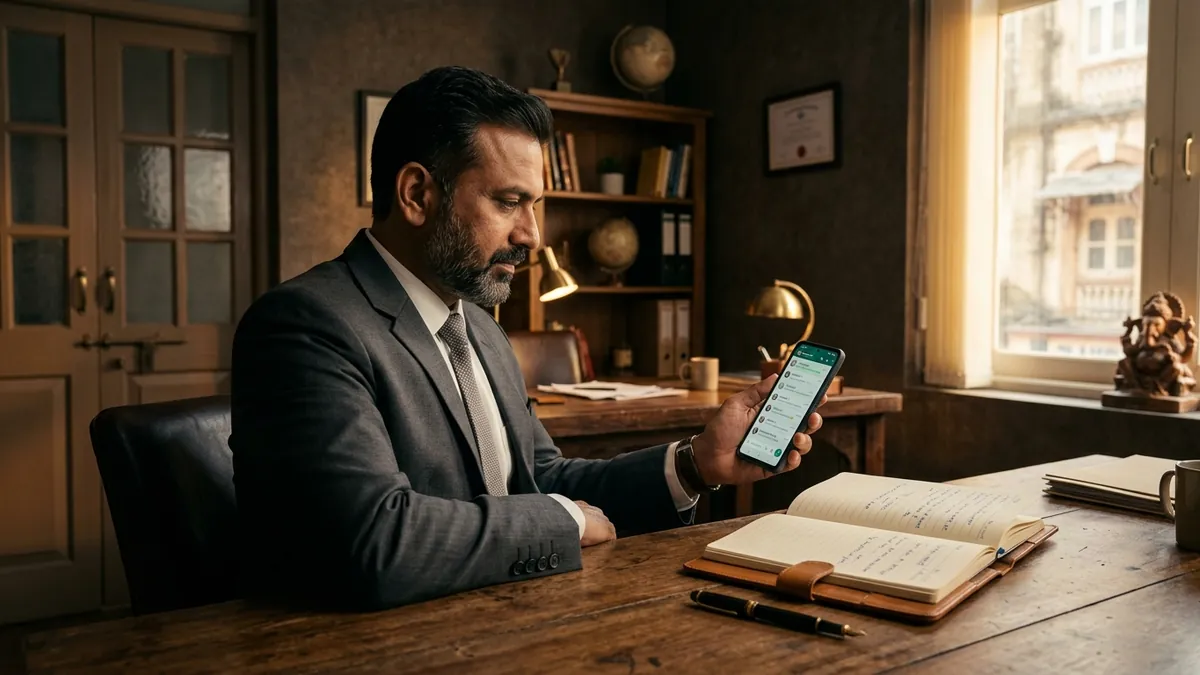
Most business owners I meet have the same complaint. They say, 'We are getting calls and messages. People are asking about our product or service. But very few actually buy.' They think the problem is pricing. Or competition. Or just bad luck with leads. In most cases, it is none of those. The real problem is what happens — or does not happen — between the first enquiry and the final sale.
Think about the last ten enquiries your business received. How quickly did you respond? What exactly did you say? Did you send any information after that first reply? Did you follow up even once? For most small and mid-sized businesses in India, the honest answer to most of those questions is uncomfortable. The enquiry comes in, you respond with a price or a basic reply, and then you wait. The buyer goes quiet. You assume they found someone cheaper. Business moves on. But that is not what is usually happening on the buyer's side.
When a buyer sends an enquiry, they are rarely ready to buy at that exact moment. They are gathering information. They might be comparing two or three options. They might need to get internal approval. They might just need a little more confidence that your business is the right choice. If your only move after that first enquiry is to send a price and wait, you are leaving the door wide open for someone else to walk in and close what you started.
I have seen this pattern with manufacturers, service businesses, consultants and retail brands alike. The gap is almost never about price. It is about trust, clarity and follow-through. Buyers today — whether they are purchasing B2B or for personal use — do not automatically trust a business just because it responded. They are looking for signals. Does this business know what it is doing? Does it understand my problem? Will dealing with them be smooth or frustrating? Your first response, and everything that follows, either builds those signals or kills them.
Here is what a poor enquiry response usually looks like. A message comes in asking about your product. You reply with a price list — often a PDF or a screenshot — and say 'Let me know if you need anything.' That is it. No context. No question to understand what the buyer actually needs. No explanation of why your offering is worth the price. No next step suggested. The buyer reads it, feels no particular pull, and moves on. You have done nothing wrong technically. But you have done nothing right either. The response was transactional when it needed to be conversational.
The fix is not complicated, but it does require some deliberate effort. Start by training yourself — or your team — to ask one or two qualifying questions before jumping to the price. Understand what the buyer needs, their timeline, their concern. Then respond with a message that speaks directly to that. If you can, share a short testimonial or a relevant example from a past client at this stage. This is not about being salesy. It is about showing the buyer that you actually listened. Then — and this is where most businesses completely fall apart — follow up. One message. Two days later. Something simple. 'Just checking if you had a chance to look at what I shared. Happy to answer any questions.' That one follow-up alone can recover 30 to 40 percent of enquiries that would have otherwise gone cold.
If you are not sure where your specific conversion gap is — whether it is the first response, the follow-up, the pricing communication or the trust signals on your platforms — that is worth examining properly. I work through exactly this kind of problem in a one-to-one consultation, where we map out the full journey from enquiry to close and identify the specific point where leads are slipping away. Most business owners are surprised at how close they already are to fixing it.
There is also a structural side to this problem. Many small businesses have no standard process for handling enquiries. It is all in the founder's head, or handled differently by different team members, or just done on instinct each time. When you do not have a defined response sequence — even a simple one — quality drops the moment you get busy. You miss follow-ups. You send inconsistent information. The buyer experience becomes unpredictable. Building even a basic enquiry-to-conversion process is one of the most high-return things a business can do. It does not need fancy software. A clear script, a follow-up reminder system and a short decision on who handles what is often enough to double your close rate. I cover this as part of the business growth workshops I run for MSME teams, because it is something that needs to be practiced, not just understood.
Getting enquiries means your marketing is working. Not converting them means your sales process is broken. These are two completely different problems, and solving the first one while ignoring the second is like filling a bucket with a hole at the bottom. Fix the follow-up. Make your first response feel human and relevant. Ask questions before you quote. Give buyers a clear next step. Do this consistently for thirty days and see what changes. The leads were always there. Now close them.
Want to understand where your business growth is stuck?
Book a Business Growth Diagnostic with Abhijit JK — an honest, focused 60-minute one-to-one session with Abhijit JK on your brand, website and growth.
Book a Business Growth Diagnostic

